From Reactive to Predictive: How AI Is Replacing the Breakdown Call
It used to be that a fleet manager’s worst nightmare started with a phone call: a driver stranded on the shoulder of I-70, a load sitting still, and a tow truck three hours out. For decades, that was just the cost of doing business. In 2026, it doesn’t have to be.
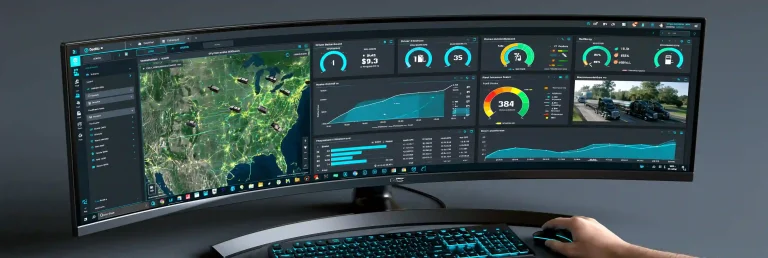
Artificial intelligence has quietly transformed what a telematics platform can do — not just telling you where your trucks are, but telling you which ones are about to let you down.

The Old Way Wasn’t Working
Traditional fleet maintenance ran on one of two models: fix it when it breaks, or follow a rigid mileage-based schedule. Both are wasteful. One leaves you exposed to costly roadside emergencies; the other has you servicing trucks that don’t need it yet while missing hidden problems in trucks that do.
The result? Unnecessary downtime, inflated labor costs, and frustrated drivers who feel like they’re operating equipment that’s always one hard mile away from a breakdown.
What Predictive Maintenance Actually Looks Like
Modern ELD hardware, when properly connected to a vehicle’s ECM, generates a continuous stream of data points that most fleets barely scratch the surface of. A predictive maintenance system makes sense of all of it — not just flagging fault codes after they’ve already triggered, but identifying the behavioral patterns that precede those codes by weeks.
The signals it watches include:
- Gradual rises in exhaust temperature across similar routes
- Declining fuel efficiency that doesn’t match load or terrain changes
- Subtle shifts in oil pressure or coolant temperature trends
- Battery voltage irregularities during cold starts
- Brake performance degradation over successive stops
| “Most fleet breakdowns are detectable 20 to 45 days before they happen. The data is already in your system — the question is whether your platform is reading it.” |
The Business Case Is Clear
When a truck breaks down mid-route, you’re not just paying for the repair. You’re paying for the tow, the hotel, the missed delivery window, the customer penalty clause, and the driver sitting idle on overtime. Predictive maintenance converts those surprise costs into scheduled shop visits — planned during off-peak hours, budgeted for in advance, and resolved before anyone’s stranded.
Fleets that have adopted AI-powered predictive maintenance report meaningful reductions in unplanned downtime, lower per-vehicle maintenance costs, and longer asset lifespans. More importantly, their drivers feel the difference — fewer breakdowns, more reliable equipment, less stress on the road.
The Hardware Gap Nobody Talks About
Here’s the catch: predictive maintenance is only as good as the data feeding it. A cheap, generic ELD pulling basic HOS logs isn’t going to give you the ECM depth you need. GPS position and engine-on/engine-off events are table stakes. Real predictive intelligence requires continuous, high-fidelity ECM polling — fuel rates, RPM curves, sensor readings, fault history — at a level of accuracy that only purpose-built hardware reliably delivers.
If your current ELD can’t tell you what’s happening inside your engine in real time, you’re not running a predictive fleet. You’re running a reactive one with a digital logbook.
The breakdown call is becoming optional. Fleets that embrace predictive telematics in 2026 won’t eliminate maintenance — they’ll just stop being surprised by it.