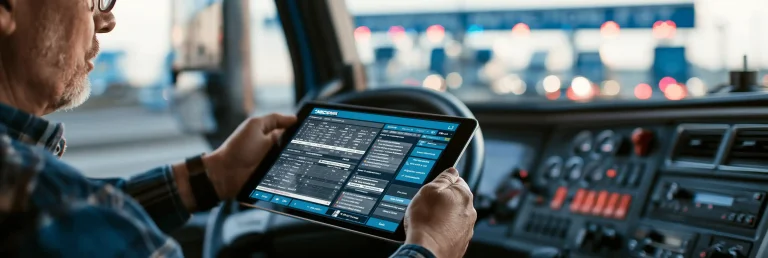
Video Telematics + ELD: Why Forward-Facing Cameras Are Becoming the New Standard
A few years ago, in-cab cameras were a hard sell. Drivers didn’t want them, and many fleet managers weren’t convinced the ROI was there. That conversation has completely changed. In 2026, video telematics is one of the fastest-growing segments in fleet technology — and the fleets that have adopted it are not going back.

What Changed?
Three things converged to make video telematics mainstream: the cost of cameras dropped significantly, AI-powered event detection made footage useful rather than overwhelming, and the legal and insurance landscape made not having it increasingly risky.
Staged accident fraud — where bad actors deliberately cause collisions with commercial trucks to collect insurance payouts — has become a documented and costly problem for carriers. A forward-facing camera with a timestamped, event-triggered recording can be the difference between a fraudulent claim succeeding and being thrown out entirely.
How AI Makes Video Actually Useful
The old objection to dashcams was practical: nobody has time to review hours of road footage. AI has solved that problem. Modern video telematics systems don’t record passively — they analyze continuously, flagging specific events and tagging them for review:
- Tailgating and unsafe following distances
- Lane departure without signaling
- Forward collision warnings
- Distracted driving detection (phone use, drowsiness)
- Harsh braking or swerving correlated with road conditions
Fleet managers receive a curated feed of the events that actually matter — not raw footage, but specific, reviewable clips tied to driver behavior data from the ELD.
| “The camera doesn’t lie, and it doesn’t forget. In an at-fault dispute, having timestamped video synchronized with ELD speed and location data is as close to an open-and-shut case as you can get.” |
The ELD Integration Advantage
The real power of video telematics comes when it’s integrated with the ELD platform rather than running as a separate system. When a hard-braking event is captured by the ELD, the camera clip from that exact moment is automatically linked to it. When a driver’s HOS shows they were approaching their 11-hour limit, reviewers can correlate that with any unusual driving behavior from the same period.
This data fusion creates a complete picture of what happened and why — something that separate, disconnected systems simply can’t provide.
Coaching, Not Just Surveillance
The most effective fleets use video telematics as a coaching tool, not just a monitoring one. When a driver is shown a clip of their own near-miss — paired with the speed, braking, and following-distance data — the impact is immediate and lasting. It’s far more effective than a verbal warning based on a data report alone.
Drivers who understand the system’s purpose, and who experience it being used fairly, tend to accept it — especially when they see it exonerate them from an accident that wasn’t their fault.
Is It Right for Every Fleet?
For carriers running long-haul routes through high-risk corridors, or fleets with young drivers or recent safety incidents, forward-facing cameras should be considered essential at this point. For smaller owner-operators, the math is simpler than ever — the cost of a camera system is typically recovered in a single avoided fraudulent claim or insurance discount.
Video telematics isn’t about distrust — it’s about protection. For the truck, for the driver, and for the business.