Owner-Operators vs. Large Fleets: Choosing the Right ELD Setup for Your Operation
The ELD market is not one-size-fits-all, even though it’s sometimes treated that way. An owner-operator running a single truck across three states has fundamentally different needs than a regional carrier managing 200 assets across a multi-state network. Getting the wrong setup doesn’t just mean paying for features you don’t use — it can mean missing the capabilities you actually need.

What Owner-Operators Actually Need
For an independent owner-operator, the priorities are straightforward: rock-solid HOS compliance, reliable hardware that doesn’t generate false violations, simple driver workflow, and a platform that doesn’t require a dedicated IT person to manage.
The key specs to look for:
- Currently listed on the FMCSA registered device list — this is non-negotiable. Verify it at eld.fmcsa.dot.gov before you buy.
- Plug-and-play installation — an owner-operator doesn’t have time for a complex installation. A self-install J1939/J1708 connection to the diagnostic port should take under 30 minutes.
- Mobile-first driver app — the ELD experience for an owner-operator is almost entirely through a smartphone app. It needs to be intuitive, fast, and functional in areas with spotty cellular coverage.
- Clear, simple pricing — watch for contracts with hardware costs, activation fees, monthly minimums, and early termination penalties stacked on top of each other.
- Responsive support — when you’re solo and you have a roadside inspection in 20 minutes, you need someone to pick up the phone.
What changes for a small fleet (2–20 trucks)?
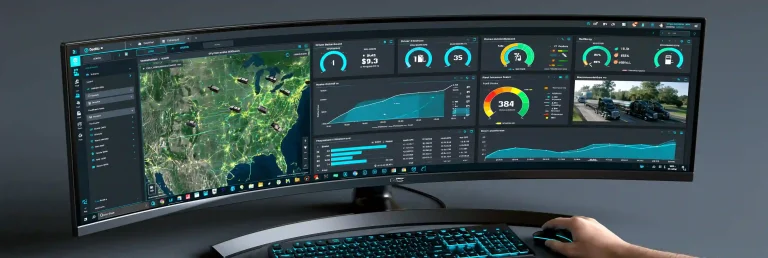
Once you move beyond a single truck, the management layer becomes important. You need a web-based fleet portal that gives you visibility across all your assets without requiring you to log into each driver’s app individually. Key additions:
- Fleet-wide live map and status dashboard
- Driver HOS summary reports for safety audits
- Basic DVIR tracking and maintenance alert capability
- Multi-driver account management with individual credentials
Where Large Fleet Needs Diverge
At 50+ trucks, the ELD conversation becomes a platform conversation. Compliance is still the foundation, but the ROI comes from what’s built on top of it:
- Deep ECM integration for predictive maintenance and engine diagnostics across a diverse asset base
- API connectivity to TMS, dispatch, payroll, and fuel card systems
- Advanced driver behavior scoring with coaching workflow tools
- Custom reporting and data export for safety directors and operations managers
- Enterprise account structure with role-based access for multiple terminals and user types
- Dedicated customer success and technical support SLAs
| “The biggest mistake large fleets make is choosing an ELD vendor on price alone and then spending two years working around platform limitations. The second biggest is buying enterprise software for a 5-truck operation and paying for complexity they’ll never use.” |
Hardware: Generic vs. Purpose-Built
This is where the decision gets nuanced. Generic, off-the-shelf ELD hardware is inexpensive and widely available. Purpose-built, carrier-grade hardware costs more upfront but is engineered for the demands of commercial trucking — wider temperature tolerances, more robust ECM connectivity, higher cellular reliability in rural areas, and better firmware support over the life of the device.
For an owner-operator doing regional hauls on predictable routes, a quality generic device may be perfectly adequate. For a fleet manager who needs reliable engine diagnostics from a mixed asset base — different makes, model years, and engine configurations — purpose-built hardware pays for itself in data quality and reduced troubleshooting time.
Questions to Ask Any ELD Vendor
Regardless of your fleet size, these questions separate serious vendors from ones who’ll leave you stranded at renewal time:
- Is your device currently on the FMCSA registered list? Has it ever been revoked or flagged?
- How are firmware updates handled, and how often do they occur?
- What does your support model look like for roadside compliance issues outside business hours?
- What’s your data ownership policy if I switch providers?
- Can I see a demo of the driver app and fleet portal before committing?
The right ELD setup isn’t the most expensive one or the cheapest one — it’s the one that fits how your operation actually works today and where it’s headed tomorrow.